Think about the last time you bought something online. You probably looked at the star rating first, but then, you went straight to the negative reviews, right? That behavior is the key to understanding digital trust. In this episode, we explore why a 'perfect' score often looks fake to consumers and how embracing transparency drives real revenue. Plus, we’ll look at the battle against fake reviews, from advanced AI detection models to the new legal crackdowns by the FTC. Let’s get into it.
Episode 1
Why might a perfect 5.0 star rating be considered a trap when shopping online?
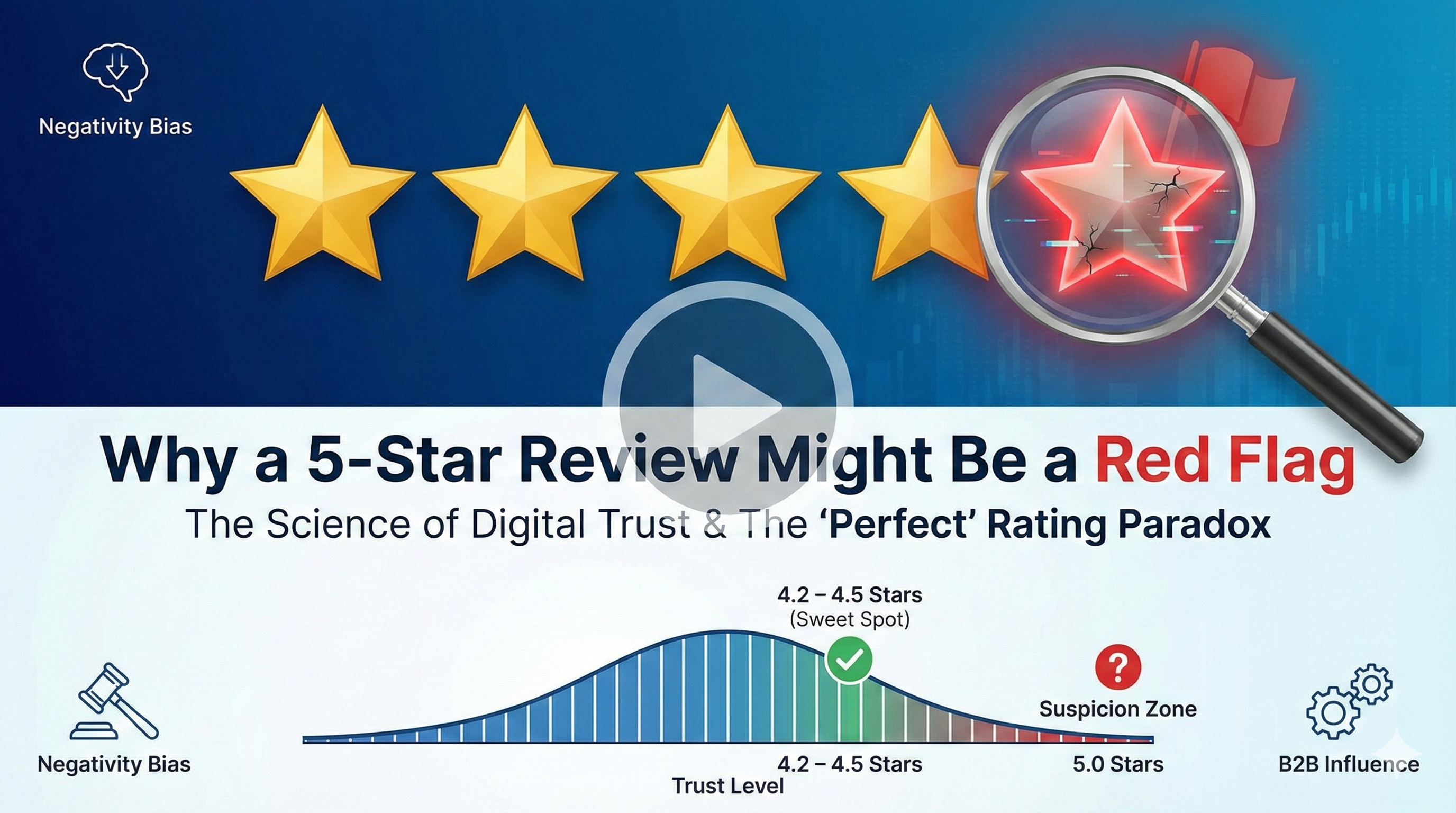
A perfect 5.0 star rating is often suspicious because it lacks any negative reviews, which consumers intuitively expect due to normal manufacturing errors or shipping delays. Research shows purchase likelihood peaks between 4.2 and 4.5 stars, and sales drop off as ratings approach 5.0, a phenomenon called the 'too good to be true syndrome.' Perfect ratings may indicate fake or incentivized reviews rather than genuine customer experiences.
How do negative reviews help consumers make better purchasing decisions?
Negative reviews act as filters that highlight deal breakers specific to individual needs. When a negative review points out a flaw irrelevant to a consumer's use case, it can actually increase trust and confidence in the product. This authenticity helps consumers de-risk their purchase by knowing the product's limitations and confirming the reviews are real.
What is the disclosure paradox related to incentivized reviews on platforms like Amazon?
The disclosure paradox refers to the failure of disclosure labels (e.g., 'received for free') to reduce the influence of incentivized reviews. Despite the warning, these reviews tend to have inflated ratings (average 4.73 stars) compared to organic reviews (average 4.08 stars), and they still increase sales. Consumers do not sufficiently discount the bias, partly because the reviews appear detailed and authentic.
What psychological mechanisms cause incentivized reviewers to give inflated ratings?
Two main mechanisms are moral licensing and strategic exaggeration. Moral licensing makes reviewers feel that disclosing they received a free product absolves them of ethical responsibility, allowing them to be biased positively. Strategic exaggeration occurs because reviewers want to maintain access to free products; giving negative reviews risks being removed from the free product list, so they inflate ratings to stay on good terms with brands.
What legal rules does the FTC enforce regarding online reviews?
The FTC prohibits conditioning incentives on positive reviews, requiring that incentives be given regardless of review sentiment. It mandates disclosure of material connections, such as reviews by employees or family members. Review suppression, or deleting negative reviews, is also prohibited. Businesses hosting reviews are generally not liable for fake reviews unless they promote them as testimonials in marketing.
How do B2B buyers use online reviews differently from regular consumers?
B2B buyers rely more heavily on reviews, with 62% saying reviews are very influential. They evaluate more vendors (six or more) and use reviews early in the consideration stage to filter potential vendors. However, they do not trust stars blindly; they validate reviews and then seek offline references and peer opinions before making a purchase decision, due to the higher stakes involved.
What role do verified purchase badges play in consumer trust?
Verified purchase badges significantly increase trust, with 95% of consumers trusting reviews from verified buyers compared to only 38% for anonymous reviews. These badges provide proof that the reviewer actually bought and used the product, which helps consumers distinguish genuine reviews from fake or bot-generated ones.
What are three practical rules consumers should follow when using online reviews to make purchases?
1) Avoid hunting for perfect 5.0 star ratings; instead, look for products rated between 4.2 and 4.5 stars where authenticity is more likely.
2) Read negative reviews selfishly to identify deal breakers relevant to your needs, using them as filters rather than deterrents.
3) Be skeptical of reviews with disclosures about free products; mentally subtract a star to adjust for bias and prefer platform-initiated reviews like Amazon Vine for more honest feedback.